Saturday, April 18, 2009

ON TURNING 65 PART I


Most of my life (before I sort of figured life out) I looked forward to 65 as the age where one would retire. Now I'm here and enjoying every day too much to retire. Some days are tiring at this age and I really need week-ends to recover, but each day brings new excitement, more incite and even new light bulbs still going on in my mind. Until you get there you can't imagine how cool it is to get to see every new day in grandchildren's eyes, and I get to see it double "up close and personal" every day at my house.


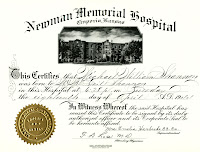
So on this day when I conclude the 65th year of being on this earth, I decided to recount where I was and little things about the "5" years. It all started at Newman Hospital in Emporia, Kansas at 6:38 p.m. on April 18, 1944.


The first 5 found me in Columbus and as always my birthday fell around Easter. It was probably about 5 that I was riding my bike one day when a bigger boy decided to try to take it away from me. I went riding down the street in Buckeye Village as fast as I could go and ran smack into a milk truck. I think the boy  was so frightened by the accident that he ran away, and I obviously recovered and went on with childhood. Another memory of this time is playing baseball in the "quad". I was the batter and I swung back so hard that I hit the catcher in the forehead and knocked him out. Maybe that's why I'm not a huge baseball fan (that and the fact that later mom didn't want me to play catcher, which was my favorite position, because I might get him in the mouth and not be able to play trombone).


I have to mention my 10th birthday because it is the only one that I remember exactly what I did. My family went to Oklahoma City to Herman's Seafood restaurant and I took my best friend Billy McGrew. I had fried shrimp which was my favorite food at the time. Billy McGrew is drawing near to the end of his career as a world expert in the social habits of apes and chimps.


By 15 my trombone was a huge part of my life and we had been living in Norman, Oklahoma for almost 10 years. Trombone stories include riding my bicycle to school across town from our second Norman home at 1212 Cruce to Norman Junior High on the East side of town. One cold morning as I was tooling along on my bike  with my trombone case on top of the bar and the handle bars I went around a corner close to home and skidded on ice and everything went down. It seems like I had a lot of crashes growing up but  such is the saga of those who are not "looking where they are going". Maybe perfect firsts spend too much time "looking ahead" to try to figure out what they want us to be when we grow up.


By 15 I had achieved a 1++ rating on my trombone solo at the District Elimination music contest in Oklahoma  City and the judge said "I have never heard a better junior high trombonist". This was when I was 12. By 13 I had finished my Eagle Scout rank. (Not much time for baseball)


Needless to say, a ton of stuff went down between 15 and 25, the most significant of which was  finding and marrying the love of my life, the Lituanian bombshell!! I was lucky that she didn't have any brothers and thus didn't know how weird I was. I met her while doing medical school at Northwestern. I turned 25 9 months after our
wedding at the old Lithuanian church in Chicago. It was the biggest event of my life to that point and was the largest wedding I had ever attended.


By 35 I had done residency at CHLA and Michael A. had been born in 1972. 


I started Saddleback Pediatrics with Norm Zeller in Mission Viejo, Ca. in July of 1973 and Vanessa was born 2 days after my Easter birthday in 1976. 


Age 35 found the family living in Lake Forest and we soon became immersed in school and soccer for the kids, running for me and our annual trips to Snowmass and Alisal. Traditions seemed important
and we continued to go to Snowmass to ski in February with the John Fowle family for ten years.  August 2009 will be our 31st week at the Alisal Ranch.


At 45 my family was still in Lake Forest and we had added another doctor to the family. Vera attained her law degree from Western State Law School in 1988.

Saturday, April 4, 2009

YOUR "PERFECT FIRST"

After reading some special books (hard for me), which helped change my life and what I believe about parenting, I came to realize that it is very important that we change the "recordings" we made while listening to and watching our parents parent us. This is called creating a narrative in one's mind about what happened in our childhood, and doing this is very important in helping us to parent in a different way. (Our parents did the very best that they could with the information that they had at the time and with how their lives had been set up in their own early years of childhood.)


 Two important premises must be prominent in our thoughts about parenting: 

     First, children must be able to act their age.

     Second, children must say what they think. 


A first child most often has two people watching her all the time, i.e. she is over- attended. (It is interesting that this over-attending seldom if ever occurs in twins or multiples.) Our first child is an experiment, and they see in our eyes the excitement and pride that we have about everything that they do. It's the first time this child that we made has ever done each of these things. (A second or any other child never receives so much attention and praise.) By the time our "perfect first" is one year old, she has figured out that she has the ability to cause things to happen and to create certain responses in us, her adoring parents. Herein lies the potential for creating what for me was an "emotional waste of time" for almost 50 years of my life. I spent hours and days trying to please others, because I thought if they were happy then they would like me and then I would valuable to them. This is referred to as deriving one's power from an outside source or being other-powered. In truth, each of us has great value (self power) and none of us is responsible for any other person's happiness. Self-value, self-power and happiness all come from within. (First child parents will likely understand this concept better than others.)


If a child does things which cause his parents to be happy and this behavior is often rewarded with praise and quite often with gifts, then it follows that the child will do these things more often. And if these are "good" behaviors, then this works very well for us as parents and we tend to say things like, "You are such a good girl" or "Daddy is so proud of you". The downside of this situation is that each child will eventually start to do thing which do not make us happy, and it then becomes possible for our first child to begin to care too much about what we think about what she does based on what will make us happy.


First children are frequently described as being perfectionist or self-driven and are quite often pleasers or performers or both. Pleasing others is nice and being able to perform in front of others is a talent. Doing either, not because one feels good inside but to make parents or others happy, can easily lead to measuring one's value, not as self-value, but as other-value. We have been working on self with our children since birth, as in self-calming, being self-entertained, and encouraging self-control. The difficult part of parenting in the first three years is helping our first to know that he is wonderful and unique and loved without causing him to think that he is this way because it is his job to do this for us (so we will be happy and proud).


The neurobiology and neuropsychology studies from UCLA and elsewhere in the last ten years have been able to identify very specifically how babies and toddlers lay down in their brain their "perception" of "Am I Wonderful" and "Do I Matter". It is not about what we say and do as parents, it is about how each child perceives what is seen and heard. The look on our face and the tone of our voice can say a lot more than any words. It is in these first three years that we lay down in our mind our original interpretation (and the associated feelings) of what has happened to us. A child can either perceive that she is a wonderful valuable person or that being "herself" is not working, in which case she may decide in the early years to be someone else. 


This leads to what I refer to as "wearing a costume". I believe that I decided to wear the doctor costume by the time I was five years old. I had many allergy and illness problems as a young child, and my parents always thought the doctors were wonderful. Since the things they said and they way they responded to my "misbehavior" (acting my age) were perceived by me as being me wasn't working, it was an easy choice to decide to wear the doctor costume. Many people will tell you that they knew early in life what they were going to "do when they grew up". And many people around us continue to wear those costumes, and it makes it very hard to get close to them and know the real person inside.


I continually reexamine this issue, and have developed a few suggestions through reflection, reading and watching children and families "grow up": 

1. Asking a first child a question about what he did is always better than telling him what we think. "Aren't you excited you can do that?" is better than "You make me so happy when you put on your shirt." "Didn't we have a fun time at the store today?" is better than "You were such a good boy at the store today." 

2. A smile or a hand on the shoulder when you child is doing a "good" self thing is better than spoken words. "I love you!" is always appropriate.

3. IF WE DON'T SET IT UP, WE SET THEM UP!

Setting life up is everything. In order for your toddler to be able to act her age, her world must be set up with proper fences (boundaries) which prevent her from getting to places where acting her age will be dangerous to her or cause a problem for us. If we set things up properly, we won't have to spend most of her day asking her to not act her age, (In toddler world, anything that is visible is doable. She is not trying to drive us crazy, just acting her age. Most, if not all, of what our parents referred to as "misbehavior" was in fact us acting our age when they didn't have it set up correctly.) I think there is a very real possibility, that if we spend much of every day say "Stop that!", "Get out of there!", "Don't do that!" or "I told you not to go in there", that our child may well decide that we don't like who she is and decide to be someone else, for example, "the perfect first child".

4. Whenever possible, avoid labeling your child. Words like good, big, pretty, and smart are all value judgments and can give a child the impression that we are in change of his value. When we measure children with words, they learn to come to us to find out if they have value. "Do you like my clothes?", "What do you think about my report card?", "Do you like this picture I drew?", or "Are you happy that I poop in the potty?" are all requests for measurement by someone other than self. It conditions our child to be "too concerned" about what other people think and to expect to be measured by others. Thus they may spend much or all of their time making others happy without realizing that happiness comes from within. (And the other they choose to be measured by, such as a boss or job, may not be those that really matter most, i.e. wife or children.) 

5. Listening to what our toddlers have to say, even if it's a strong irrational opinion which is the definition of a tantrum, will go a long way toward helping them to develop a strong self and good boundaries. Too many of us first children have struggled much of our life with saying "no" or saying what we really think. Another reason to learn to listen to them early in their lives is the adage that "if we listen to them at 3, they might listen to us at 13".


The four books:

1. John Bradshaw On the Family

2. William Sammons The Self-Calmed Baby

3. Wayne Dyer What Do You Really Want for Your Children

4. Daniel Siegel Parenting From the Inside Out


Sunday, March 22, 2009

ONE BLOG DESERVES ANOTHER

As long as telling about the bumps of life involves talking about my history, I have decided to begin recording my history for my kids, grandkids and whoever come after. Both of my parents were willing to do this at my request and finished before they passed and the information is invaluable. So the new blog will be called PERFECT FIRST, which is what I was growing up and what I managed to slowly (and maybe not totally) get over really "growing up". The first installment will appear here and on the new blog.

KANSAS BEGINNINGS


Growing up I didn't know what I found out later "growing up"


I was born in Emporia in the flint hills of southeastern Kansas at 6:38 p.m. of April 18, 1944.
(For those who don't know, Paul Revere made his famous ride on the 18th of April in '75, a few years before) I was delivered by Dr. F.D. Lose of Madison, who had delivered my mother, Helen, and was the Edwards family physician. 
As you will read, I was the first child of two first children. What a perfect set-up to be the "PERFECT FIRST".


My mother, Helen Lorraine Edwards, was the much younger first child of 
the second family of my grandfather William H. Edwards, after whom I take my middle name. W. H. Edwards was a successful 
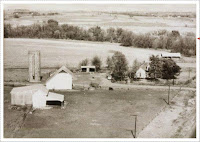
farmer/rancher in Greenwood county and his first wife, Maud, died in childbirth with the second child, my mother's half-brother John. The first child had been born three years before. My grandfather subsequently married a 16 year younger school teacher from Gridley, Bertha Mudge; and when my mother was born she had a half-sister, Mertie who was 13 and John who was 10. Thus no surprise that she grew up with essentially four parents as what I would later describe as the "Princess of the Prairie". (as in photo)   
She was the darling of her father's eye and I'm sure of her other three family members as well. Photographs of her throughout childhood show her always dressed in the
 "style" of the day. Probably the first real disappointment of her entire life came just as I was born when her father was committed to a mental hospital in Topeka for what was I'm sure Alzh
eimer's disease. She was very angry with her mother for a long time for "putting him away", but stories of my grandfather, the gentleman rancher, walking naked along country roads sound like it was a necessity. Aside from this event and his death two years later, my mother won almost all of the contests in her life, including the last time she played duplicated bridge at the age of 90 about 6 months before her passing. This probably had something to do with her wanting her sons to succeed in all that we did.


My father, Gail (no middle name is recorded on his birth certificate, although he says in his autobiography that he was born Gail Robert after his fathers middle name; the Navy insisted that he have one and gave him back Robert), came from a completely different upbringing, the son of an ice delivery man with an interest in farming. He was likewise born in a small town near Kansas City and had a 16 month-younger sister Lois and an almost 5 year-younger brother Norman. (Of interest is that all three siblings would later come to the end of life within 18 months of each other.) He remembered helping with the growing of crops on the small plot beside their house and delivering papers twice a day in high school on foot and with a wagon for the Sunday papers. He also worked at a local drug store as a "soda jerk" to save money for college since his parents were not able to afford anything beyond high school. In Emporia, where he and my mother attended Emporia State Teachers College, he continued to work at Cole's cafe and where he could get a meal each day.

In my father's family the men either died early (my grandfather, Frank Shannon at 51) or left the family as in the case of my great grandfather who left his family when my grandfather was only six years old. As a result the Shannon families were in general run by Matriarchs. It always bothered me growing up that my mother always seemed to make the decisions, but I guess that had probably been set up in my father's life.


Since my father was in the navy at the time of my birth, the second place i lived (shortly after birth in Greenwood country) was Corpus Christi, Texas, where my father was assistant to the chaplain and in the Navy band. His undergraduate education had been in music and he was working as a band director in a town west of Emporia when WWII broke out. I remember being told about my parents being in Emporia with Dad's band at a festival, when the director of the festival came out on stage 
to announce that Pearl Harbon had been bombed. After the war we returned to Kansas and he became the high school band director at Garnett, Kansas. My earliest memories (I think I remember) are of the bandstand in the city square in Garnett, a set of alphabet blocks that I got for Christmas there, sparklers on the 4th of July, and getting into trouble with my mom for talking the grocery man into pulling my wagon home with the groceries - my mom had sent me to the store just over the tracks at the ripe old age of 4. Of course it was different times.


My brother, Mark, was born on March 26, 1946, while we were still living in Garnett. At exactly the same time, my mother's hero (her father) died from pneumonia in the mental hospital. My parent's left Mark in the hospital and took me to the funeral in Hamilton. There is no chance my mother could have had happy eyes for months thereafter.


WHY CRISCO?


Slow learners learn certain things slowly by making the same mistake from time to time and only eventually learning not to 
make the mistake. Thus I am typing this for the third time having not yet learned to always save text while looking for other information.

Crisco was the first shortening to be made entirely from vegetable oil. Interestingly, many Americans still think it is or was made from lard and refer to it as "Crisco lard". Crisco was introduced in 1911 by William Procter & James Gamble. They hired Edwin C. Kayser, a chemist, to develop the process to hydrogenate cottonseed oil, which ensured that it would remain solid at normal storage temperatures. Their initial purpose for the substance was for making candles, but when electricity began to cut into the candle market, and since the product looked like lard, they began selling it as a food. The name Crisco came from the initial sounds of "crystallized cottonseed oil".

Crisco now consists of a blend of soybean oil, fully hydrogenated cottonseed oil, and partially hydrogenated soybean and cottonseed oils. All Crisco is trans fat free and a separate trans fat free product was introduced in a green can in 2004 but was a dismal failure. Market recognition would not allow Crisco to succeed in a "green" can. 

In 2002 Procter & Gamble divested the Crisco brand to their stockholders who merged with The J. M Smucker Co. 

I began using Crisco for skin purposes in the late 1990s after reading about it in a dermatology "throw-away" journal. The dermatologist had been giving his patients small white tubes of ointment and they would return asking for another tube of the miracle ointment. Only then would he divulge that the tubes contained Crisco. I subsequently began using it on baby diaper areas and later on my own dry face as a moisturizer. Further uses have followed: excellent, inexpensive moisturizer for "whimpy blue-eyed" dry skin (like mine) or eczema; good for repairing sun fried forehead after failing to use sunscreen on an overcast day (gets rid of the red and doesn't peel); useful in wound healing with less scarring (makes removing stitches easier); will remove paint, grease or adhesives from skin.

Other uses found on the internet include:
1. removing lipstick from clothing
2. cleaning ink or markers from hands and vinyl surfaces
3. revitalizing wooden bowls
4. preserving wooden cutting boards
5. polishing rubber galoshes (maybe not in California)
6. making white or colored clown make-up
7. some other stuff about close encounters

Crisco may not work for everyone (like magnets) but for those of us that it does, we love it!

Saturday, March 21, 2009

BEGINNINGS


What to do when the busy days of pediatric practice come to an end? - dola, BLOG!

So this is the beginning before the end (probably 2016) since first children always like to be "good" at things when they go public. This way I have time to practice and develop the Crisco style. 
My intention is to have a place where I can pass on things I have learned about the bumps of life during my growing up and my "growing up". It's sort of like everything I know I learned in kindergarten but I was a slower learner. I also found out later (like  late college) that I was an auditory learner, but fortunately my high school English teacher, Mae Gilbert, taught me to write even though reading was tough. Thus my intention is to write down my thoughts combined with whatever photos and music come to mind.

This photo may have something to do with why I married a Lithuanian, because my great-great grandmother looks very similar to my wife's grandmother photo.